Facebook Group vs a Digital Noticeboard for Your Club
A Facebook group is free and familiar. But it comes with two problems that don't go away: not everyone is on Facebook, and the ones who are only see what the algorithm decides to show them.
Where Facebook groups work well
- Easy to set up, no cost
- Familiar interface for people who already use Facebook daily
- Decent for photo sharing and casual comments
Where it starts to break down
- Not everyone's on Facebook. Younger members increasingly aren't, and some older members never were. Either way, you're excluding people by default.
- The algorithm buries posts. Even members in the group often don't see important announcements unless they happen to be scrolling at the right moment.
- It's not public by default. Most groups are private or closed, so anyone not already a member — a prospective member, a parent, a sponsor — can't see anything.
- No structure. Facebook is a feed, not a noticeboard. There's no dedicated "contacts" section, no persistent "next event" area — everything is just another post.
- Poor discoverability. Facebook groups rank badly (or not at all) in Google search, so people looking for your club online may never find you.
You don't have to choose
Plenty of groups keep their Facebook page for community chat and photos, and add a public noticeboard as the place people actually go to find out what's on, who to contact, and when things are happening.
Here's what your noticeboard could look like
A public page anyone can find — no algorithm, no group to join first. Just the events, contacts and documents people are actually looking for.
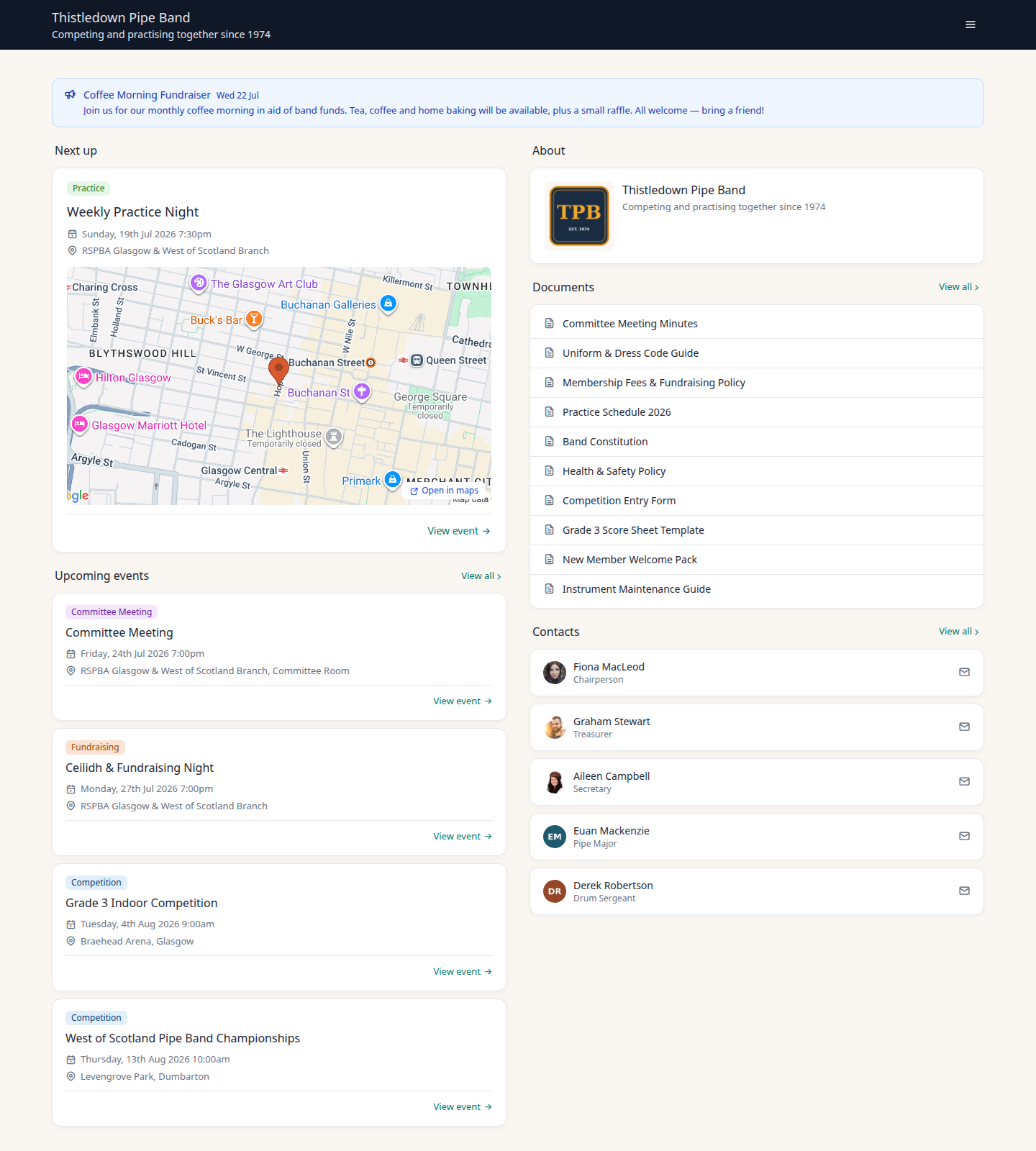
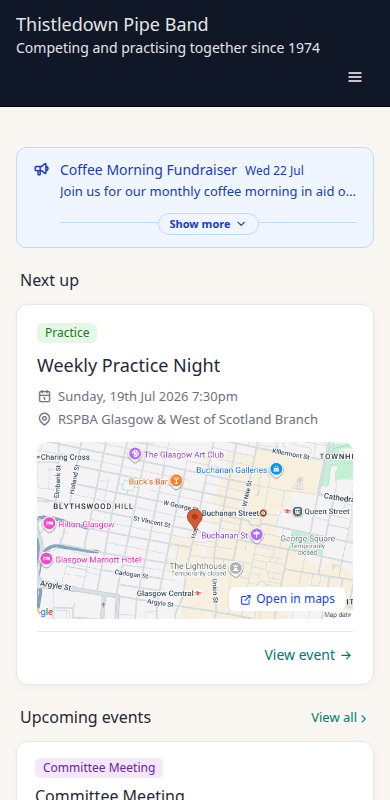
For your pipe band
A Facebook group won't show up when someone searches for a band in their area, and closed groups hide your practice details from anyone not already a member.
- A public noticeboard means new recruits can find your practice night and location via a simple search, not a Facebook invite
- Competition results and event history stay organised and visible, not buried under unrelated posts
- Sponsors and event organisers get a proper public page to point to, rather than "we're on Facebook, just search for us"
For your sports club (football, running, and similar)
Facebook's algorithm means even paid-up members can miss a postponement or fixture change buried in their feed.
- Fixtures, results, and postponements live somewhere everyone can check directly, rather than hoping the post surfaces
- New players and parents can see training times and what the club's about before deciding to join a Facebook group
- Multiple teams or age groups can each have a clear, organised presence instead of one crowded group feed
For your pub team or band
If you're relying on a Facebook page to tell people where you're playing next, you're relying on people seeing that specific post at that specific moment.
- A noticeboard gives venues, organisers, and fans one reliable place to check upcoming dates — no algorithm involved
- Set lists, rehearsal changes, and availability stay clear and current, not scattered through old posts
- A public page works as a simple shopfront when someone's trying to book you and doesn't want to message through Facebook
For your friends' board game night
You probably don't need a Facebook group at all for something this informal — which is exactly the point.
- A simple, always-current page ("next session: date, time, place") beats scrolling a group feed to find the last update
- No algorithm deciding whether your friends actually see the next date
- Easy to share a link with someone new, rather than adding them to a group they'll barely use
Keep the Facebook group for chat and photos. Get a noticeboard for the things people actually need to find.